

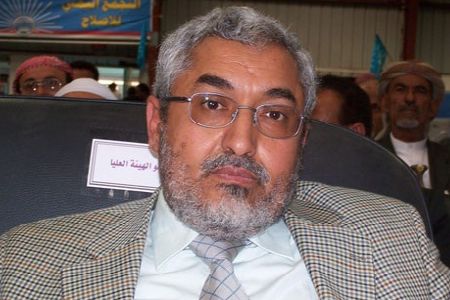
Rights Radar for Human Rights, based in The Hague, the Netherlands, has expressed deep concern over the latest developments regarding the fate of prominent Yemeni politician Mohammed Qahtan, who has been forcibly disappeared by the Houthi militia for the past 11 years. Rights Radar emphasizes that, in light of the recently disclosed information regarding the Houthi militia’s claims about what are believed to be Mohammed Qahtan’s remains, it is both unreasonable and unacceptable to accept this narrative, as it is inconsistent with the known facts. This is particularly true given that the claim that Qahtan was killed in a bombing contradicts documented evidence held by numerous specialized human rights organizations, including Rights Radar. As we have previously stated, the Houthi militia’s assertion that Qahtan was killed in an airstrike in 2015 is completely inconsistent with well-documented facts. Most notably, on February 5, 2019, the Houthi-affiliated Specialized Criminal Prosecution issued a memorandum to its Political Security Bureau ordering Qahtan’s release. This document directly contradicts the Houthi militia’s earlier claim that he had been killed in April 2015. In addition, the same memorandum refers to a criminal case filed against Qahtan on November 11, 2015—approximately seven months after his alleged death. This constitutes an implicit official acknowledgment that he was being held by the Houthis until at least that date. Therefore, it is both regrettable and confusing that the Houthi militia continues to pursue an unbelievable narrative regarding Qahtan’s fate, despite its humanitarian, moral, and legal responsibilities toward him as a victim and toward his family and narratives. We believe that the Houthi narrative of the circumstances surrounding his death, as well as the remains presented as belonging to him, lacks credibility and is contradicted by both scientific evidence and logic. How could an entity holding someone of Qahtan’s social and political importance fail to preserve his body, even if we were to accept the weak assumption that he was killed in an airstrike? This is particularly so because, regardless of the force that struck the body, it could not have caused the complete disappearance of the entire upper half, especially the head and skull, which are among the strongest parts of the human body and can endure, even when fractured, for years, decades, or even centuries. Therefore, the claim that only half of the body was recovered appears to be a blatant attempt to promote the Houthi narrative, likely to conceal the torture and execution that Qahtan is alleged to have endured in Houthi prisons. Accordingly, we reiterate our call for the establishment of an independent international commission of inquiry to uncover the full truth surrounding the circumstances of Qahtan’s detention, enforced disappearance, and ultimate fate, and to determine legal responsibility and ensure accountability for all the violations he endured, including his abduction, enforced disappearance, the manipulation of his fate, and the exploitation of his case to inflict suffering on his family and to exert political pressure on his party and the government during every round of negotiations concerning prisoners and abductees. The mere discovery of half of a body does not provide a logical or objective explanation of Qahtan’s fate, let alone resolve questions regarding his well-being, particularly when both domestic and international public opinion are aware of who abducted him and who bears full responsibility for his safety and life. Moreover, the claim that the Houthis collected samples from the alleged remains raises serious questions about the authenticity of the body. As the party responsible for Qahtan’s abduction, they would reasonably be expected to have full knowledge of the circumstances surrounding his alleged injuries, if indeed he was killed in a bombing, as they claim. Since his abduction from his home in Sana’a on April 4, 2015, Mohammed Qahtan has been subjected to a series of violations that, taken together, amount to crimes against humanity under the principles and provisions of international law and international humanitarian law. These violations began with his abduction, followed by his enforced disappearance and the denial of contact with his family for nearly 11 years. Even this fundamental human right was exploited as a means of pressure, blackmail, and psychological torture. Now, through this same approach and scenario, they are attempting to reveal his fate while simultaneously subjecting his family to psychological torture. In doing so, they are opening a new chapter of emotional manipulation and defying the persistent local and international demands to reveal Qahtan’s fate, let alone ensure his safety. The Houthi leadership must understand that criminal responsibility and its legal consequences cannot be evaded and apply both individually and collectively. It must also be emphasized that the Houthi militia’s senior leadership bears full responsibility, whether directly or indirectly, not only for Qahtan’s fate and well-being but also for the fate and well-being of all those detained, abducted, and forcibly disappeared in the Houthi prisons across the various districts and governorates under its control. In conclusion, we emphasize the responsibility of the international community in relation to this case, particularly given that Qahtan’s case falls within the scope of UN Security Council Resolution 2216. Accordingly, the relevant international bodies are obligated to monitor the implementation of the resolution through the appropriate mechanisms. In this context, we call for the United Nations to support the establishment of an independent international commission of inquiry to conduct a comprehensive investigation into the circumstances surrounding Qahtan’s detention and, if confirmed, his death. We also call for the prompt completion of forensic examinations and autopsy procedures, in accordance with international standards, to verify the identity of the alleged remains. The Houthi militia, including its entire senior leadership, bears full responsibility for disclosing all the circumstances surrounding the case and providing documented and demonstrable answers regarding Qahtan’s fate. We also emphasize that the United Nations and the international community must ensure that this case remains open until all the requirements for full justice have been fulfilled. We also believe it is important to recall that international experience in countries such as Bosnia and Herzegovina, Argentina, and Chile has demonstrated that the recovery of victims’ remains does not extinguish legal responsibility. Rather, it opens the path to uncovering the truth and, consequently, ensuring accountability, regardless of the time or place. The case of Mohammed Qahtan will remain a test of the prospects for peace with the Houthis and a true measure of the international community’s commitment to combating impunity. Until that is achieved, the question that cannot be ignored will remain unanswered: What is the full truth about the fate of Mohammed Qahtan?
10
Jul
2026

Comments 0